Facility Cleaning Standards for Educational Institutions
Maintaining facility cleaning standards for educational institutions ensures a safe, productive environment for students and staff. A professional cleaning approach involves defining baseline hygiene compliance, applying strict disinfection protocols to high-touch surfaces, and utilizing environmentally responsible products to protect the long-term health of your campus.
A consistently maintained setting supports better academic performance and allows your educators to maintain their focus on instruction. When classrooms, libraries, and hallways remain clean and organized, students experience fewer distractions and better cognitive focus. Professional commercial cleaning removes the burden of maintenance from your teaching staff, empowering them to dedicate their full attention to guiding their students.
This guide provides an overview of the essential factors that ensure a sanitary educational setting and how professional standards address these operational requirements. You will learn about the precise differences between sanitizing and disinfecting, the importance of indoor air quality, and how partnering with an insured cleaning provider protects your campus.
The Foundation of Institutional Cleaning Requirements
Defining Baseline Hygiene Compliance
Industry standards dictate that educational facilities must meet specific requirements to ensure a baseline of health and safety for all occupants. Compliance involves adhering to guidelines established by public health organizations, which dictate how often surfaces should be cleaned and which chemical agents are safe for academic environments.
Identifying High-Traffic Zones
Specific areas on your campus experience the most wear and require concentrated maintenance, such as cafeterias, gymnasiums, and main corridors. These high-traffic zones accumulate debris and bacteria at a rapid pace, making them primary targets for daily, intensive cleaning efforts.
Establishing Clear Operational Protocols
Documenting your daily cleaning procedures is essential to ensure consistent execution across your entire educational facility. Clear protocols provide specific instructions on the methods, frequencies, and tools required for every room on your campus, leaving no ambiguity for the custodial staff.

Differentiating Cleaning, Sanitizing, and Disinfecting
Understanding the Three Tiers of Surface Care
Professional maintenance requires understanding the precise differences between removing visible dirt, lowering bacterial counts, and completely destroying pathogens on hard surfaces. Cleaning simply clears away soil and debris, sanitizing reduces bacteria to a level recognized as safe by public health codes, and disinfecting utilizes stronger chemicals to eliminate specific viruses and fungi. Applying the correct tier of service to each unique area of your campus ensures that your facility remains both visually appealing and biologically secure.
Applying Proper Dwell Times
Professional cleaning teams ensure disinfectants remain on surfaces long enough to effectively eliminate contagious viruses. This required duration, known as dwell time, varies depending on the specific product and the pathogen being targeted, often ranging from one to ten minutes. Adhering strictly to these manufacturer instructions prevents the survival of resilient bacteria and ensures your campus receives the maximum protection intended by the chemical formula.
Targeting High-Touch Surfaces
A reliable maintenance strategy requires applying rigorous disinfection protocols to doorknobs, shared technology, and desks to break the chain of infection. Because hundreds of students and faculty interact with these common touchpoints daily, they serve as the primary transfer mechanisms for seasonal illnesses. Frequently treating these specific surfaces with commercial-grade disinfectants significantly lowers the transmission rate of pathogens throughout your educational institution.
Maintaining Safe and Durable Flooring Systems
Managing Floor Safety and Slip Prevention
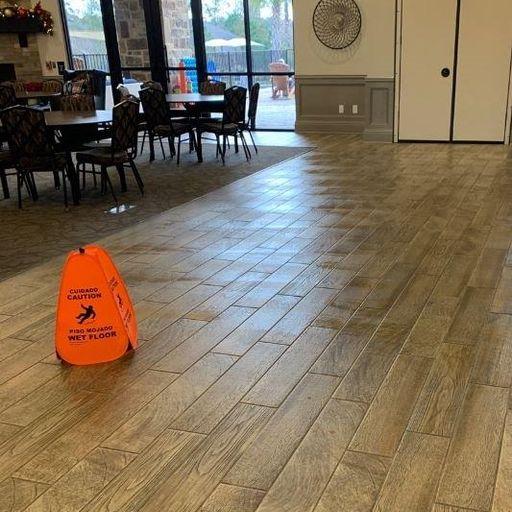
Rigorous procedures are required to keep hard surfaces meticulously clean while preserving traction to prevent accidents in your hallways. Routine maintenance involves using specialized degreasers and auto-scrubbers that extract moisture instantly, ensuring that hard floors do not become slippery hazards during school hours.
Extracting Contaminants from Carpeting
Scheduled hot water extraction removes deeply embedded dirt, dust, and allergens from carpeted classrooms and libraries. Over time, commercial carpets act as large filters, trapping microscopic pollutants that standard vacuuming simply cannot reach. Utilizing professional extraction equipment physically pulls these trapped contaminants from the fibers, extending the lifespan of your flooring while instantly improving the overall sanitation of your learning spaces.
Controlling Debris at Entryways
Trapping exterior dirt and moisture at facility entrances before it tracks into your main academic areas reduces overall maintenance requirements. Strategically placing commercial-grade matting systems at every exterior door captures soil from shoes, preventing it from acting as an abrasive element on your interior hard floors.
Improving Indoor Air Quality for Academic Focus
Recognizing the Impact of Airborne Pollutants
Accumulated dust, mold spores, and allergens negatively affect the respiratory health of your students and faculty. When airborne pollutants circulate continuously through an educational facility, they often trigger asthma attacks, allergic reactions, and persistent coughing among the building occupants. Acknowledging this hidden threat is the first step toward implementing maintenance procedures that actively scrub the environment of these microscopic irritants.
Utilizing HEPA Filtration Technology
Professionally trained staff use specialized vacuuming equipment to permanently remove particulate matter from your facility’s air circulation. Vacuums equipped with High-Efficiency Particulate Air (HEPA) filters capture particles as small as 0.3 microns, ensuring that captured dust is not exhausted back into the classroom.
Linking Clean Air to Cognitive Performance
There is an established connection between proper ventilation, reduced asthma symptoms, and improved concentration during class time. When students are not struggling with poor indoor air quality, they experience fewer headaches and report less fatigue, directly supporting their ability to learn. Investing in thorough dust removal and air quality management translates into measurable benefits for the academic success of your entire student body.
Managing Restroom and Locker Room Hygiene
Preventing Cross-Contamination in Washrooms
Strict, OSHA-compliant protocols for cleaning and sanitizing restroom facilities require using color-coded equipment to prevent dangerous cross-contamination. This visual system ensures that the microfiber cloths and mops used on restroom floors or toilets are never inadvertently utilized on cafeteria tables or classroom desks. Implementing this foundational safety standard protects your entire campus from the accidental spread of severe gastrointestinal pathogens.
Addressing Biological Hazards and Odors
Handling bodily fluids safely while eliminating the bacteria that cause lingering odors requires fully trained personnel. Restrooms and locker rooms present unique biological hazards that demand specialized enzymatic cleaners designed to consume uric acid and other organic waste at the molecular level.
Enforcing Restocking and Inspection Routines
Routine management of soap, paper products, and sanitation stations ensures your hygiene facilities remain functional for high-volume use. An empty soap dispenser compromises the hygiene of hundreds of students, making consistent inventory checks a mandatory component of school maintenance.
Selecting Safe and Environmentally Responsible Products
Defining Green Cleaning in Education
Eco-friendly cleaning involves using products certified by organizations like Green Seal or EPA Safer Choice to minimize harsh chemical usage and protect the long-term health of your campus. These specialized formulas deliver commercial-grade sanitation without introducing volatile organic compounds (VOCs) into your enclosed learning spaces. Adopting a green cleaning program demonstrates a commitment to providing a biologically safe setting for children whose developing respiratory systems are particularly vulnerable.
Preventing Chemical Sensitivities
Avoiding toxic residues and strong synthetic fragrances creates a safer environment for students with asthma or environmental allergies. Traditional cleaning chemicals often leave behind invisible residues on desks and emit fumes that can trigger severe physical reactions during the school day.
Supporting Institutional Sustainability Goals
Choosing certified, non-toxic cleaning practices aligns with the broader environmental stewardship values of your educational institution. Modern schools frequently incorporate sustainability into their core mission, and your facility maintenance protocols must reflect that same ecological responsibility.
Achieving Compliance with Signature Cleaning Concepts, LLC
Assessing Your Campus Requirements
Signature Cleaning Concepts, LLC evaluates your specific facility to develop a tailored cleaning strategy that addresses your exact institutional needs. Because every campus features unique architectural layouts, flooring types, and enrollment sizes, a generic cleaning plan will inevitably leave critical areas neglected. A professional assessment identifies your highest-risk zones and allocates labor accordingly, ensuring your maintenance budget is utilized with maximum efficiency and precision.
Relying on Vetted Professional Personnel
Partnering with a fully insured provider whose staff has passed rigorous background checks protects your school before anyone steps onto your campus. Security is paramount in educational settings, meaning every custodial worker must be thoroughly vetted to guarantee the safety of your students and faculty. Utilizing a reliable commercial partner shifts the burden of liability, screening, and human resources management entirely off the shoulders of your school administrators.
Providing Consistent Quality Assurance
A dedicated management team conducts routine inspections to ensure your facility remains spotless, compliant, and prepared for daily operations. Quality assurance requires regular audits of the cleaning staff’s performance, identifying and correcting minor oversights before they develop into systemic hygiene failures.
Structuring Long-Term Maintenance Schedules
Organizing Daily and Weekly Responsibilities
Dividing cleaning tasks into structured intervals ensures no critical area of your educational facility is overlooked during the busy school week. While high-touch surfaces and restrooms demand daily attention, tasks like high-dusting air vents or buffing hard floors can be scheduled on a weekly or bi-weekly rotation.
Maximizing Scheduled Facility Closures
Utilizing holiday breaks and summer vacations allows for intensive restorative maintenance, such as complete floor stripping and finishing. These extended closures provide the necessary time for professional crews to apply chemical treatments that require long drying periods or utilize heavy equipment that cannot be operated near students.
Adapting to Evolving Health Mandates
A professional maintenance plan remains flexible enough to quickly accommodate new public health advisories or unexpected localized outbreaks. When an educational institution faces a sudden surge in seasonal illness, your cleaning protocols must scale immediately to include enhanced disinfection of all communal areas. Partnering with an experienced commercial cleaning provider ensures your campus possesses the resources and expertise required to pivot operations rapidly during an emergency.
Securing Your Educational Environment
A reliable, comprehensive cleaning approach protects the health, safety, and reputation of your educational institution. When your facility operates under standardized maintenance protocols, you actively minimize the transmission of illness and create an environment that fosters academic focus.
Facility administrators are encouraged to assess their existing protocols against strict industry benchmarks to identify necessary areas for improvement. Reviewing your current disinfection frequencies, chemical selections, and floor care routines will reveal opportunities to elevate the hygiene standards of your buildings.
Selecting an experienced, fully insured cleaning partner ensures your school environment remains professional, welcoming, and safe. Taking these factors into account will help you secure a trusted provider that handles your compliance requirements, allowing your educators to focus entirely on their students.
https://www.google.com/maps?cid=5464939504344514741